
What Is Out-of-Home Advertising, and Does It Still Work? Formats and Planning
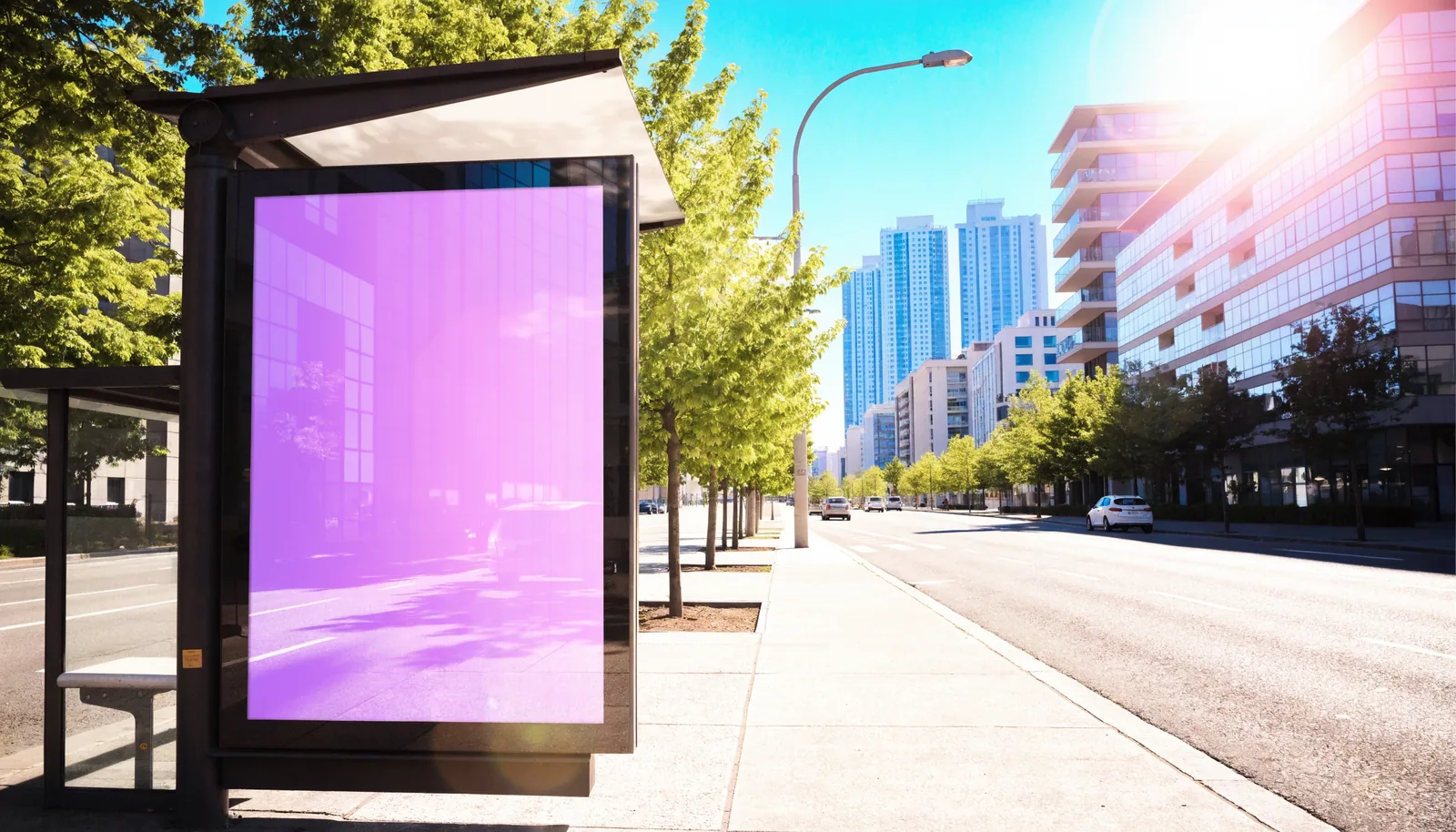
At a time when screens take up so much of our day, it’s fair to wonder where out-of-home advertising fits in. Yet every day, people travel the same routes — from home to work, from school to the shops. Out-of-home advertising puts the brand right inside that daily journey.
Short Answer: What Is Out-of-Home Advertising, and Does It Work?
Out-of-home advertising covers all the billboards, street-level panels (CLP), megalights, digital screens and similar spaces that brands use to reach large audiences outdoors and in public places. In the right location, with a message that can be read in seconds and planned together with other channels, it’s an effective medium for awareness and regional visibility.
In this article you’ll find:
- Out-of-home advertising formats and placements
- The state of out-of-home ad investment in Türkiye
- Out-of-home’s role in the plan, and what digital out-of-home (DOOH) offers
- What makes good creative for out-of-home
- How impact is measured, plus a checklist for an effective plan
Out-of-Home Advertising Formats and Placements
The IAB Türkiye and Deloitte report groups out-of-home ad spaces into four categories. Spaces at transit points can also be part of a plan:
Category | Example placements | Typical use |
Advertising units | Billboards, street panels (CLP), megalights, megaboards, banners | Constant visibility on streets, at junctions and along walkways |
Large formats | Building walls, giant boards, parapets, glass façades | High-impact visibility that’s noticed from afar |
Digital out-of-home | LED screens; mall, airport and point-of-sale screens | Messages that change by time of day and context |
Sports venues | Stadium and indoor arena ad spaces | Brand visibility at matches and events |
Transit | Metro, bus shelter and airport spaces | Regular repetition along specific routes |
Which placement to choose depends on where your audience passes during the day and on the campaign’s goal. Street panels and bus shelters stand out for foot traffic, while billboards and large formats stand out for vehicle traffic. Sports venues are planned around the match and event calendar.
Out-of-Home Ad Investment in Türkiye
According to the 2024 report by IAB Türkiye and Deloitte, out-of-home ad investment in Türkiye stood at TRY 10.94 billion. That’s a 115.2% increase over the previous year in lira terms, accounting for 5.1% of total media investment. The figure is an estimate based on revenues reported by companies in the sector.
Roughly 37% of the investment went to advertising units and 17% to digital out-of-home, while large formats and sports venues each took about 23%. The report also notes that new units added to the inventory are mostly digital.
Does Out-of-Home Advertising Still Work?
Out-of-home’s power comes from meeting people as they move through the real world. Someone who takes the same route every day may see the same ad many times over the course of a campaign — and that repetition helps the brand stick in their mind.
Out-of-home is especially strong in three situations: launching a new product, building awareness with a broad audience, and businesses whose customers are concentrated in a particular city or region. For regional businesses, a plan built on a few well-chosen sites can be efficient even on a limited budget.
Out-of-home sits in public space where everyone can see it. During a launch, that visibility can make the brand’s ads in other channels easier to recognize as well.
How Does Out-of-Home Work with Other Channels?
Out-of-home can have a bigger impact when it’s planned on the same calendar as other channels. Someone who sees the brand on a billboard may search for it the same day, or recognize its ad more easily when it shows up on social media.
That’s why, when an out-of-home campaign goes live, search ads, social media and the website are prepared for the same message. For how channels come together in one plan, see What Is 360-Degree Marketing?
What Does Digital Out-of-Home (DOOH) Offer?
- Time-based messaging: The same screen can show different messages in the morning and the evening.
- Flexible duration: You can plan short campaigns or ones focused on specific days.
- Fast changes: Creative can be updated without printing or installation.
- Contextual content: The message can vary by day, event or location.
- Programmatic buying: Some screens can also be bought through programmatic platforms. We explain how this works in What Is Programmatic Advertising?
How Is the Impact of Out-of-Home Advertising Measured?
Measurement starts with planning. Sites are chosen using the routes your audience travels and foot or vehicle traffic data. During the flight, we verify that the purchased spaces ran as contracted.
The campaign’s impact is tracked with a before-and-after comparison. Brand search volume, website traffic, store visits and applications are the key signals. For digital screens, airing times and impression counts can also be reported.
For regional campaigns, you can also compare across regions: the change in the region where the campaign ran is compared with similar regions where it didn’t.
What Should Out-of-Home Creative Look Like?
People usually glance at out-of-home ads for a moment, while walking or from a vehicle. So the creative should be simple and understood at a single glance:
- Use a single message and a short headline.
- Make the brand name and logo big enough to read from a distance.
- Create strong color contrast between the background and the text.
- If needed, add a short web address or a phrase people can search for.
- Adapt the message to the location — for example, point to the store on a mall screen.
When Might Out-of-Home Not Be the First Choice?
- When you need to measure sales instantly: For a niche, fully digital product with click-based sales targets, digital performance channels can come first, with out-of-home added to the plan at a later stage.
- When the message can’t be grasped quickly: Out-of-home ads are usually seen on the move. Choose one clear message instead of long copy.
- When impact won’t be tracked: If brand searches and site traffic aren’t tracked, out-of-home’s contribution stays invisible.
Checklist for an Effective Out-of-Home Plan
- Have you mapped the routes your audience travels during the day?
- Were locations chosen using traffic data?
- Is the campaign long enough for people to see the ad more than once?
- Can the creative be read at a single glance?
- Are search, social media and the website ready for the same message?
- Have you recorded the data for a before-and-after comparison?
Out-of-Home Planning with StormX Media
Our Offline & Traditional Media service selects out-of-home sites using location and foot-traffic data, evaluating billboards, digital screens, metro and mall placements in one plan. We model the reach, frequency and cost balance separately for each channel.
During the flight, we verify that the purchased spaces actually ran, and we report the campaign’s impact on brand searches, site traffic and applications with a before-and-after comparison. We can review your plan together in a free 20-minute media review. You can reach us through our Contact page.